New CE marking, or not? Substantial modifications and assemblies under (EU) 2023/1230
The Machinery Regulation (EU) 2023/1230 applies in full from 20 January 2027. From that date the Machinery Directive 2006/42/EC is withdrawn, and machinery put into service in the EU must meet the new Regulation. The trigger is putting a machine into service, not only selling it: anything that starts working in the EU after that date answers to 2023/1230.
A new machine built by a single manufacturer was always a clear case. The Regulation is now explicit about two others that were not: a substantial modification of a machine already in use, and the formation of an assembly from several machines. Either one returns a machine that was already on the market to the start of the conformity process — a new CE marking, carried out by whoever performed the modification or built the assembly.
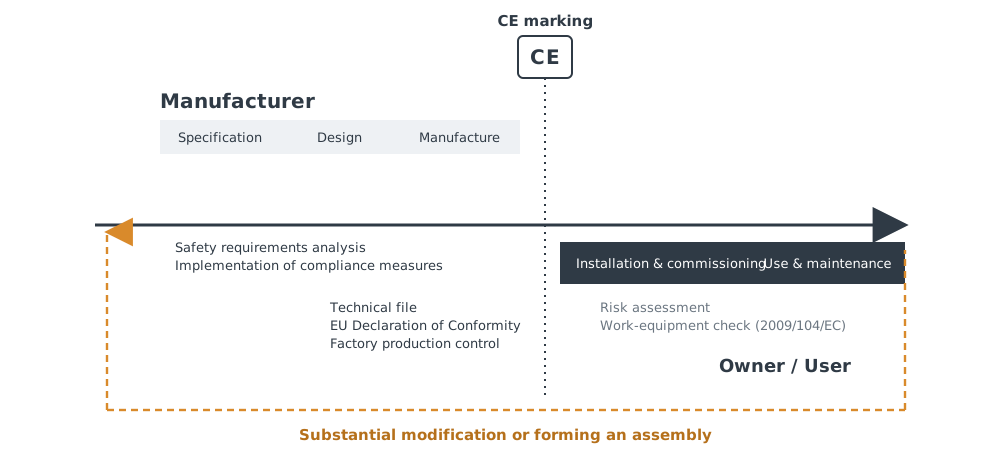
Substantial modification
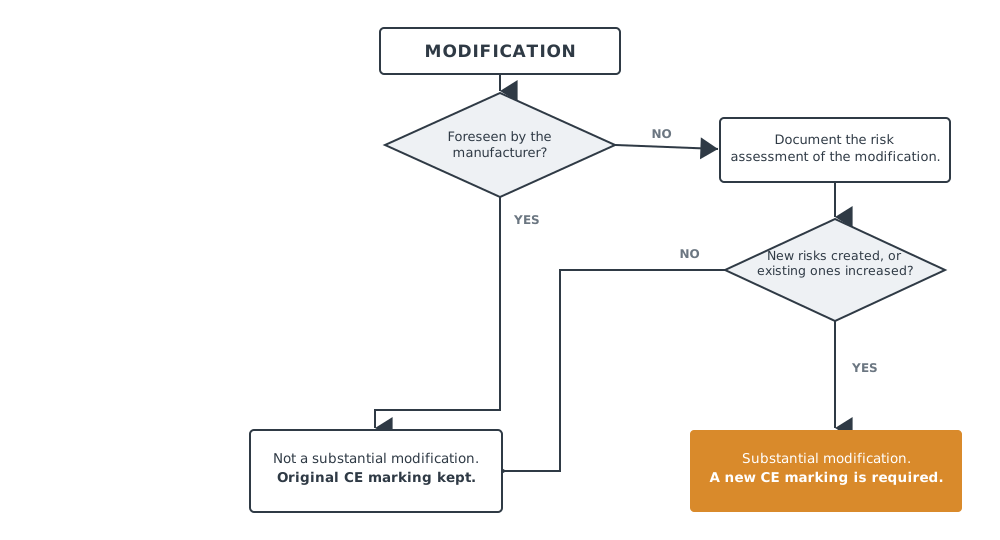
The Regulation defines a substantial modification as a modification of a machine, by physical or digital means, not foreseen by the manufacturer, that affects safety by creating a new hazard or increasing an existing risk — to the point that it requires one of the following:
- adding guards or interlocks;
- changing the safety control system;
- measures to ensure stability or mechanical strength.
The change can be physical or digital, and it is not only about hardware. It covers added equipment or partly completed machinery; software — parameters, speeds, cycle times, the safety program; and a change of intended use, such as a new material to process or a new operating environment.
Whatever the change, the decision is not a matter of opinion. Every modification requires a risk assessment to EN ISO 12100 to establish whether it introduces a new risk or increases an existing one. From 2027 that assessment is mandatory in every case, and its conclusion places the modification in one of two categories. If the machine stays safe without new safety measures, it is not substantial and keeps its original CE marking. If it needs new safeguarding to be safe, it is substantial: it requires a new CE marking, and whoever made the change takes on the manufacturer's duties — technical file and Declaration of Conformity included.
Assemblies (‘conjuntos’)
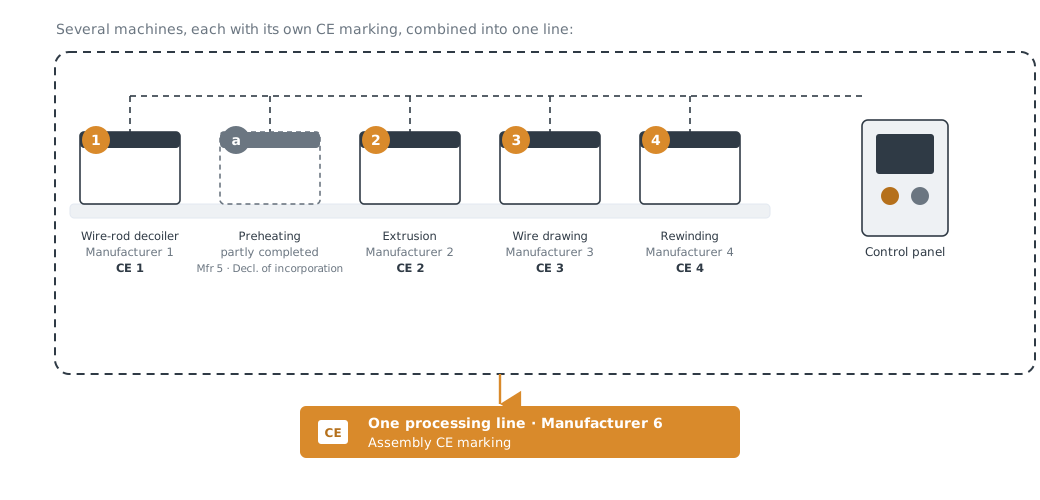
The Regulation also applies to assemblies of machinery: a set of machines that, to achieve a single result, are arranged and controlled to function as one machine.
An assembly needs its own CE marking when the machines:
- share a productive purpose;
- share control systems for coordinated operation;
- create risks arising from the way they are combined;
- share safety measures;
- or incorporate partly completed machinery.
Each machine keeping its own CE marking does not remove this obligation. The assembly's CE marking covers the risks created where the machines interact — which no individual manufacturer assessed, because none could see the finished line. Machines merely placed one after another, each keeping its own independent control and safeguarding, are not an assembly and keep their individual CE markings.
Anything put into service after 20 January 2027 must meet the new Regulation. Being ready before the date costs less than reacting after it.
Where this applies
Two situations put the manufacturer's obligations on you without a machine ever leaving your plant: modifying equipment you already run, and integrating a line from several suppliers' machines. In both, the risk assessment, the technical file and the Declaration of Conformity become yours once the change or the assembly crosses the threshold. What settles it is the risk assessment — done before the work, not after an inspection.
If you're not sure whether a specific modification or a new line crosses that threshold, send us the details or book a video call and we'll tell you where it stands.
Book a video call Explain your case
This article is general information on EU machinery legislation, not legal advice on a specific product. Whether a modification is substantial, or a set of machines is an assembly, depends on the machine and its intended use, and is decided by the risk assessment.